
Which of the following best describes the Knights of Labor's approach to union organizing?
Rationale
It included skilled and unskilled workers in its ranks.
The Knights of Labor was notable for its inclusive approach to union organizing, welcoming both skilled and unskilled workers into its membership. This broad-based strategy aimed to unite all laborers in the fight for better working conditions and wages, marking a significant shift in the labor movement of the time.
A) It focused on membership that excluded some races and ethnic groups. This statement inaccurately portrays the Knights of Labor's philosophy. While the organization initially faced challenges related to racial and ethnic inclusivity, it strived to include diverse laborers and actively supported the rights of various groups, aiming to unite workers across racial and ethnic lines.
B) It supported violent resistance to overthrow the government. The Knights of Labor did not advocate for violent resistance; rather, they promoted peaceful negotiations and reforms. Their approach was rooted in moral persuasion and collective action rather than violent upheaval, which distinguishes them from other labor movements that may have resorted to more aggressive tactics.
C) It included skilled and unskilled workers in its ranks. This statement accurately represents the Knights of Labor's approach, as they were one of the first unions to welcome both skilled artisans and unskilled laborers. This inclusivity was fundamental to their goal of advocating for the rights of all workers, regardless of their occupation.
D) It advocated for federal officials to lead mediation talks with corporations. The Knights of Labor preferred to organize and advocate for workers' rights independently rather than relying on federal officials for mediation. They sought to empower workers to negotiate directly with their employers, emphasizing grassroots organizing over top-down intervention.
E) It negotiated for improved working conditions and wages for particular trades. While the Knights of Labor did seek improved working conditions and wages, their broader mission encompassed the rights and interests of all workers, not just specific trades. This inclusivity was a key feature of their organizing strategy, setting them apart from craft unions that focused solely on skilled labor.
Conclusion The Knights of Labor's strategy of uniting both skilled and unskilled workers marked a significant evolution in labor organizing. By fostering an inclusive membership, they aimed to create a powerful collective voice advocating for workers' rights across diverse sectors. Their commitment to inclusivity and equality was instrumental in shaping the labor movement, emphasizing solidarity among all workers rather than a focus on individual trades or exclusive membership criteria.
Which of the following was the most immediate outcome of United States involvement in the First World War?
Rationale
Post-WWI, Republicans opposed the League of Nations obligations (A), leading to U.S. rejection of the Treaty of Versailles. The Nye Committee (B) was 1930s, the Cold War (C) was post-WWII, Indias independence (D) was later, and isolationism dominated over internationalism (E).
Which of the following describes the United States Supreme Court ruling in Brown v. Board of Education of Topeka (1954)?
Rationale
Public school systems cannot segregate schools based on race.
The ruling in Brown v. Board of Education of Topeka (1954) declared that racial segregation in public schools was unconstitutional, effectively overturning the precedent set by Plessy v. Ferguson and establishing that "separate but equal" educational facilities are inherently unequal.
A) School districts must provide accommodations for English-language learners. This choice pertains to the rights of non-native English speakers in education but is not the focus of the Brown v. Board of Education ruling. The case specifically addressed racial segregation, rather than the accommodations for language learners, which is a separate issue in education law.
B) All children have the right to receive a public education. While this statement reflects a general principle of education, it does not capture the essence of the Brown v. Board decision. The case was primarily concerned with the legality of racial segregation in public schools, rather than the broader right to education for all children.
C) It is legal to bus students from urban school districts to suburban school districts. This statement relates to school desegregation efforts and policies that emerged later, but it is not a principle established by the Brown v. Board ruling. The case focused specifically on the unconstitutionality of racial segregation in schools, not the logistics of student transportation.
E) Educational institutions must provide equal funding for men's and women's athletic programs. This choice pertains to Title IX and gender equity in education, which is a different legal issue not addressed by Brown v. Board of Education. The ruling focused solely on race-based segregation rather than gender-based funding disparities.
Conclusion The landmark ruling in Brown v. Board of Education fundamentally transformed the landscape of American public education by declaring racial segregation unconstitutional. While other choices touch on important educational issues, only option D accurately reflects the core principle established by this pivotal case, emphasizing that public schools cannot segregate students based on race. This decision laid the groundwork for further advancements in civil rights and educational equality.
Which of the following best describes the immediate events that led to the nationwide Pullman strike of 1894?
Rationale
A train company instituted layoffs and cut wages for the remaining workforce.
The Pullman strike of 1894 was primarily triggered by the Pullman Company's decision to reduce wages while maintaining high rents for company housing, leading to widespread discontent among workers. This decision directly resulted in a nationwide strike as workers sought to protest their deteriorating economic conditions.
A) Slaughterhouse workers experienced poor working conditions and low pay. This choice refers to a separate labor issue unrelated to the Pullman strike. While poor working conditions and low pay were common grievances among many laborers during this period, they do not specifically describe the events that led to the Pullman strike, which was focused on the railroad industry.
B) A southern textile mill refused to accept a collective bargaining agreement. This option speaks to labor disputes in the textile industry, which are distinct from the events surrounding the Pullman strike. The Pullman strike was initiated by grievances within the rail industry, particularly regarding wage cuts and layoffs, not collective bargaining failures in textiles.
C) A train company instituted layoffs and cut wages for the remaining workforce. This is the correct response as it accurately captures the immediate cause of the Pullman strike. The Pullman Company reduced wages while keeping rents the same, prompting workers to organize and protest, ultimately leading to a nationwide strike that affected the railroad industry and related logistics.
D) Dockyard workers in San Francisco were forced to work under dangerous conditions. Although dockyard workers faced significant challenges, this choice pertains to a different context and labor struggle. The Pullman strike specifically arose from issues within the railroad sector, stemming from wage cuts and layoffs rather than conditions faced by dockworkers.
E) Large steel companies replaced skilled workers with unskilled immigrant labor. This option addresses issues of labor replacement in the steel industry, which again is unrelated to the Pullman strike. The Pullman strike was rooted in wage reductions and layoffs at the Pullman Company, not the replacement of skilled labor in steel manufacturing.
Conclusion The nationwide Pullman strike of 1894 was directly instigated by the Pullman Company's wage cuts and layoffs, which led to significant unrest among workers. While various labor issues existed during this era, the specific events surrounding the Pullman strike were centered on the railroad industry's economic challenges, highlighting the interconnectedness of labor rights and economic conditions during the late 19th century.
Ronald Reagans presidential administration received criticism for its delayed and reluctant response to which of the following public health crises?
Rationale
The emerging HIV/AIDS epidemic.
Ronald Reagan's presidential administration faced significant criticism for its slow and hesitant response to the HIV/AIDS epidemic during the 1980s. The lack of immediate action and public acknowledgment of the crisis contributed to widespread suffering and a prolonged delay in funding and research efforts.
A) The discovery of the SARS virus The SARS virus was identified in 2003, well after Reagan's presidency ended in 1989. Therefore, it could not be a public health crisis addressed during his administration, making this choice incorrect.
B) The worldwide spread of tuberculosis While tuberculosis remains a public health concern, the significant global spread of the disease did not coincide with Reagan's presidency in a way that prompted major criticism of his administration's response. Tuberculosis was a recognized issue, but it was not the focus of public health discourse during that era like HIV/AIDS was.
D) The high levels of lead in the national water supply Concerns about lead in drinking water have existed for decades, but they did not reach a peak during Reagan's presidency that warranted the level of criticism associated with the HIV/AIDS epidemic. The public health responses to lead issues were more gradual and did not invoke the same urgency or backlash.
E) The outbreak of the Ebola virus in West Africa The Ebola virus outbreak in West Africa occurred in 2014, long after Reagan's administration. Similar to the SARS virus, this crisis could not have been addressed during his presidency, rendering this option incorrect.
Conclusion During Ronald Reagan's presidency, the HIV/AIDS epidemic emerged as a critical public health crisis that was met with a notably slow and reluctant response from his administration. This lack of urgency drew substantial criticism, contrasting sharply with the urgent actions demanded by the severity of the epidemic. The other options presented either occurred outside his presidency or did not evoke the same level of public health urgency and criticism.
Model of travel in major urban centers, such as Boston and New York City, were most transformed during the late nineteenth and early twentieth centuries through the use of
Rationale
Electric streetcars and subway lines transformed travel in major urban centers during the late nineteenth and early twentieth centuries.
The introduction of electric streetcars and subway lines revolutionized urban transportation by providing efficient and reliable means of travel, accommodating the rapid population growth and urbanization of cities like Boston and New York City.
A) Train-Athletic steamships and ocean liners While steamships and ocean liners were significant for long-distance travel and trade, they did not play a transformative role in urban transportation within cities. Their primary function was connecting different regions rather than facilitating local commutes within major urban centers.
B) Transcontinental railroads Transcontinental railroads primarily connected distant cities across the country, enhancing long-haul travel and commerce. However, they did not address the immediate urban transport needs of residents within cities, where shorter, more frequent travel was essential.
D) Highways built for automobiles The development of highways for automobiles came later, primarily in the mid-twentieth century. While highways eventually reshaped urban travel, they were not the primary mode of transportation during the late nineteenth and early twentieth centuries, which was dominated by streetcars and subways.
E) Horse-drawn carts and carriages Horse-drawn carts and carriages were common before the advent of electric streetcars and subways. However, they were limited in capacity and speed, making them less effective as urban populations grew and demands for efficient transportation increased.
Conclusion The late nineteenth and early twentieth centuries were pivotal for urban transportation, marked by the introduction of electric streetcars and subway lines. These innovations facilitated the movement of large populations within cities, reflecting the shift towards more modern transportation solutions that could accommodate the rapid urbanization occurring during this period. Other forms of transportation, such as steamships and horse-drawn vehicles, were either too slow or less suited to the growing needs of urban commuters.
The speaker in the excerpt would likely have supported all of the following EXCEPT the:
Rationale
Granting of formal independence to Cuba.
The speaker, Albert J. Beveridge, advocates for the expansion of American influence and governance, suggesting a belief in American superiority and a duty to extend liberty. This implies he would oppose granting full independence to Cuba, as it would contradict his view of American governance as a benevolent force.
A) Open Door Policy with China Beveridge would likely support the Open Door Policy, which aimed to ensure equal trading rights for all nations in China. This policy aligns with his perspective on expanding American influence and maintaining a strong presence in global affairs, particularly in Asia.
B) Annexation of Hawaii The annexation of Hawaii would be consistent with Beveridge's beliefs regarding American expansionism and the perceived responsibility to govern territories deemed less capable of self-rule. He would view this as a continuation of the march of liberty that he describes.
C) Philippine-American War The Philippine-American War represents a direct action to assert American control over the Philippines, which aligns with Beveridge's views on American governance and the obligation to civilize and administer other nations. He would likely support this conflict as part of America's imperial mission.
D) Acquisition of Puerto Rico and Guam Acquiring Puerto Rico and Guam fits with Beveridge's ideology of expansion and the belief that America should bring its governance to territories that cannot self-govern. He would see this as part of America's duty and destiny.
Conclusion Beveridge's excerpt reveals a strong belief in American superiority and the necessity to govern territories incapable of self-rule. While he supports various forms of expansion and control, he would oppose the granting of formal independence to Cuba, as it would counter his vision of American governance as a guiding force in the world. This reflects a broader imperialist mindset prevalent during his time, where expansion was seen as a moral obligation.
The sentiments expressed in the image were most similar to which of the following foreign policy ideas?
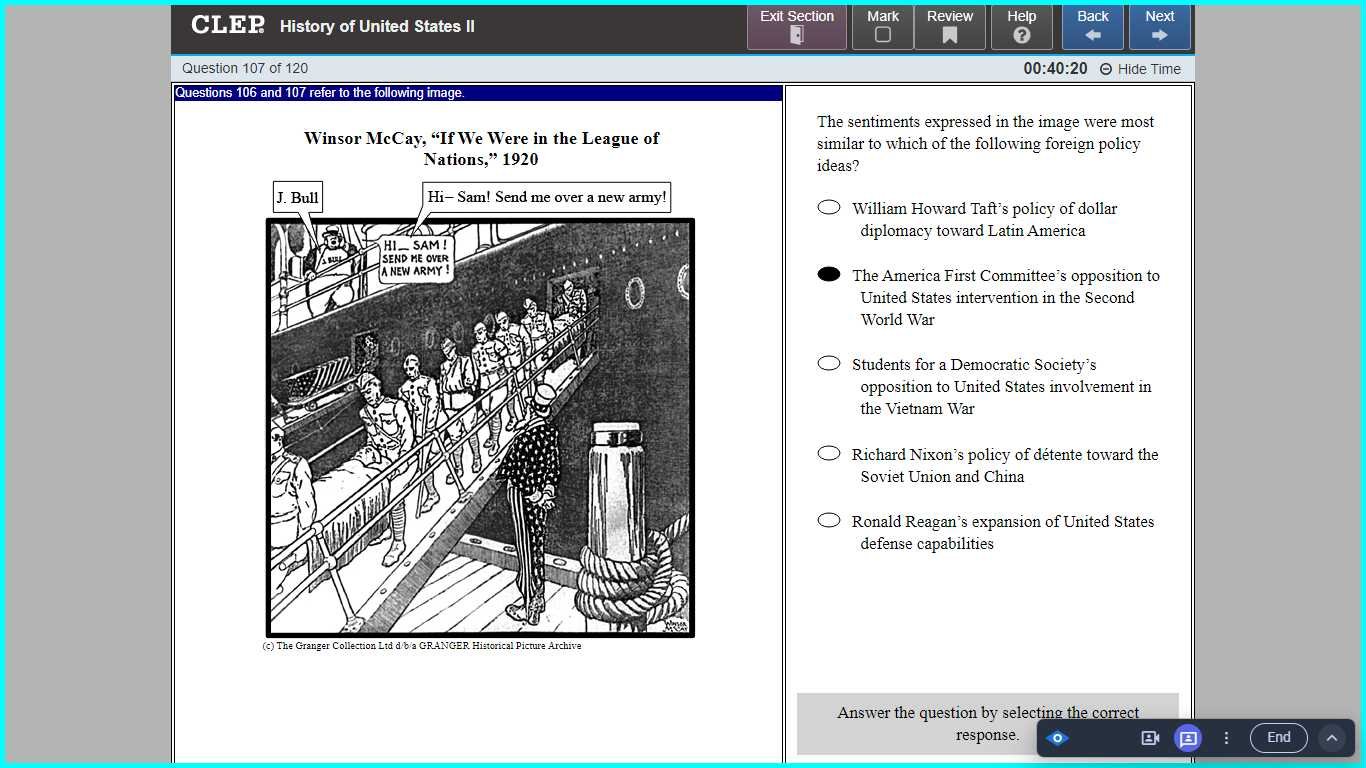
Rationale
The America First Committee's opposition to United States intervention in the Second World War.
The sentiments expressed in the image resonate with the America First Committee's stance, which focused on isolationism and a strong opposition to U.S. involvement in foreign conflicts during the prelude to World War II. This perspective reflects a similar emphasis on prioritizing national interests and avoiding entanglement in overseas wars.
A) William Howard Taft's policy of dollar diplomacy toward Latin America Dollar diplomacy was aimed at extending American influence in Latin America through economic means rather than military intervention. This approach often involved investing in foreign economies and fostering American business interests, contrasting with the isolationist sentiment that seeks to avoid foreign entanglements altogether.
B) The America First Committee's opposition to United States intervention in the Second World War As stated, this choice aligns perfectly with the sentiments expressed in the image, emphasizing a preference for non-intervention and prioritizing domestic concerns over foreign conflicts. The committee's motto encapsulated the isolationist philosophy prevalent at the time, making this choice the most accurate reflection of the sentiments depicted.
C) Students for a Democratic Society's opposition to United States involvement in the Vietnam War While the Students for a Democratic Society (SDS) also opposed military involvement, their focus was on anti-war activism during the 1960s, specifically regarding Vietnam. This activism stemmed from a reaction against perceived imperialist policies, which differs from the earlier isolationist sentiments associated with the America First Committee.
D) Richard Nixon's policy of detente toward the Soviet Union and China Nixon's policy of detente involved easing tensions and improving diplomatic relations with these nations, which represents an engagement strategy rather than a withdrawal from foreign involvement. This proactive approach contrasts sharply with the isolationist stance represented in the image.
E) Ronald Reagan's expansion of United States defense capabilities Reagan's policies focused on strengthening military capabilities and increasing intervention in foreign affairs, particularly against the Soviet Union. This expansionist view directly opposes the isolationist sentiment reflected in the image, which advocates for limited foreign engagement.
Conclusion The sentiments expressed in the image align closely with the America First Committee's opposition to U.S. intervention in the Second World War, highlighting a preference for isolationism and prioritization of national interests. In contrast, the other choices reflect varying degrees of engagement or interventionist policies, illustrating the fundamental difference between isolationist and interventionist foreign policy approaches.
The United States Supreme Court ruling in Pleazy v. Ferguson resulted in which of the following?
Rationale
Legal racial segregation under the “separate but equal” doctrine.
The Supreme Court ruling in Plessy v. Ferguson established the legal framework for racial segregation in the United States, legitimizing the “separate but equal” doctrine, which allowed for separate facilities for different races as long as they were considered equal.
A) Legal racial segregation under the “separate but equal” doctrine This choice accurately reflects the outcome of the Plessy v. Ferguson decision, where the Court ruled that racial segregation was constitutional as long as the separate facilities provided for each race were equal. This ruling upheld state laws that enforced racial segregation and laid the groundwork for systemic discrimination in various aspects of public life.
B) Widespread public acceptance of the theory of accommodationism While the ruling did contribute to the acceptance of segregationist policies, it did not directly lead to the acceptance of accommodationism, which refers to a broader social philosophy advocating for gradual change and coexistence. The ruling primarily reinforced existing segregation rather than promoting accommodation strategies.
C) An end to racial discrimination in public education Plessy v. Ferguson did not end racial discrimination; rather, it solidified the legal basis for it. The decision allowed for the continuation of racially segregated schools and public facilities, which persisted for many decades until later rulings, such as Brown v. Board of Education, addressed these inequalities.
D) The federal government outlawing violent groups like the Ku Klux Klan The ruling in Plessy v. Ferguson had no direct implications for the federal government's stance on groups like the Ku Klux Klan. The decision focused on legal segregation rather than addressing the actions of violent extremist groups, which continued to operate in the context of the prevailing legal and social norms.
E) The guarantee of equal treatment for all racial groups under the Fourteenth Amendment On the contrary, the Plessy v. Ferguson ruling interpreted the Fourteenth Amendment in a way that permitted inequality through the “separate but equal” doctrine. This decision contradicted the amendment's intent to ensure equal protection under the law, as it allowed systemic discrimination to flourish.
Conclusion The Plessy v. Ferguson ruling is a pivotal moment in U.S. legal history, as it established the constitutionality of racial segregation under the guise of equality. This decision had profound implications for civil rights, entrenching discriminatory practices that would not be challenged until the civil rights movement of the mid-20th century.
The United States government established the Freedmens Bureau for which of the following purposes?
Rationale
To provide relief and support for formerly enslaved people.
The Freedmen's Bureau was established to assist formerly enslaved individuals in their transition to freedom, offering essential services such as food, housing, education, and medical care. This mission was crucial in helping to integrate former slaves into society following the Civil War.
A) To enforce the provisions for citizenship and due process in the Fourteenth Amendment While the Freedmen's Bureau did advocate for the rights of African Americans, its primary focus was not on enforcing the Fourteenth Amendment. Instead, the Bureau aimed to provide immediate support and assistance, rather than functioning as a legal enforcement agency for constitutional rights.
B) To enlist formerly enslaved people for military service in the West The Bureau did not primarily serve as a recruitment agency for military service. Although some formerly enslaved individuals did serve in the military during and after the Civil War, this was not a central purpose of the Freedmen's Bureau, which was more focused on social and economic support.
D) To confiscate land from Confederate officials and distribute it to formerly enslaved people Although there were discussions about land redistribution, the Freedmen's Bureau was not established specifically to confiscate land. The actual implementation of land redistribution was limited and often faced political resistance, making this choice inaccurate regarding the Bureau's main objectives.
E) To ensure that all enslaved people in the Confederacy had been emancipated The Freedmen's Bureau was not responsible for the emancipation process itself; that was enacted by the Emancipation Proclamation and later the Thirteenth Amendment. The Bureau's role was focused more on aiding those who were already freed rather than overseeing the emancipation of enslaved individuals.
Conclusion The Freedmen's Bureau was fundamentally aimed at providing relief and support to formerly enslaved people, assisting them in their transition to a free society. While it played a role in advocating for civil rights and addressing the needs of African Americans post-Civil War, its core purpose was to deliver immediate assistance and resources necessary for rebuilding lives shattered by slavery.
The Dawes Severalty Act of 1887 is associated with which of the following federal policies regarding Native Americans?
Rationale
The Dawes Severalty Act of 1887 is associated with the assimilation of Native Americans into White society.
The Dawes Severalty Act aimed to transform Native American tribes into individual landowners, promoting assimilation into mainstream American culture. By allotting individual plots of land to Native Americans, the Act sought to encourage farming and a lifestyle similar to that of White settlers, thereby undermining tribal sovereignty and cultural practices.
A) The reclamation of Native American cultural identity and heritage This choice suggests a focus on preserving and restoring cultural practices, which is contrary to the intent of the Dawes Act. Instead of supporting cultural identity, the Act aimed to erase traditional tribal structures and practices by promoting individualism and assimilation.
B) The federal relocation of Native Americans to urban areas While relocation has occurred in various contexts, the Dawes Act specifically dealt with allotting land to Native Americans rather than relocating them to urban environments. The focus was on individual land ownership rather than urban settlement.
C) The assimilation of Native Americans into White society The primary goal of the Dawes Severalty Act was indeed to assimilate Native Americans into White society by allotting them individual plots of land and promoting farming, thereby encouraging them to adopt Euro-American lifestyles and abandon their tribal identities.
D) The return of Native American land lost through broken treaties This choice implies a restoration of land, which is not aligned with the Dawes Act's objectives. The Act did not return land lost to treaties; instead, it often resulted in the loss of tribal land as it divided communal holdings into individual parcels.
E) The creation of a reservation system for Native Americans The reservation system existed prior to the Dawes Act and was not its purpose. The Act aimed to dismantle communal land holdings and promote individual land ownership, which often led to the loss of land rather than its preservation within a reservation context.
Conclusion The Dawes Severalty Act of 1887 was fundamentally designed to promote the assimilation of Native Americans into White society by converting tribal land into individual allotments. This policy aimed to undermine Native American cultural identities and promote Euro-American agricultural practices, leading to significant changes in tribal structures and land ownership. Understanding this Act is crucial for recognizing the historical context of Native American policies in the United States.
The three main groups that had access to political power in the South during Radical Reconstruction were
Rationale
Scalawags, carpetbaggers, and formerly enslaved people.
During Radical Reconstruction, political power in the South was predominantly accessed by scalawags (white Southerners who supported Reconstruction), carpetbaggers (Northern transplants seeking economic opportunities), and formerly enslaved people who were gaining their rights and representation in the political sphere.
A) Formerly enslaved people, the planter class, and carpetbaggers This option incorrectly includes the planter class, which largely opposed Reconstruction efforts and sought to maintain their pre-war social and economic power. The planter class was not a significant group in the push for reconstruction, as they often resisted the changes brought about by the other groups listed.
B) Small farmers, the planter class, and formerly enslaved people While formerly enslaved people were integral to the political landscape during Reconstruction, small farmers did not have the same political influence as scalawags or carpetbaggers. Additionally, the planter class's opposition to these groups makes this combination inaccurate for representing those in power.
C) Carpetbaggers, the planter class, and small farmers This choice includes carpetbaggers, but it also incorrectly features the planter class and small farmers. The planter class's resistance to Reconstruction undermines their inclusion, while small farmers did not play a significant role in the political power dynamics of the time.
E) Yankees, scalawags, and former Confederate officials This option erroneously includes former Confederate officials, who were often excluded from political power during Reconstruction due to their previous roles in the rebellion. Yankees, or Northerners, were not a distinct political group in the South during this period, which further invalidates this option.
Conclusion The political landscape during Radical Reconstruction was primarily shaped by scalawags, carpetbaggers, and formerly enslaved people, who collectively sought to transform Southern society and governance. The planter class and former Confederate officials were largely excluded from this new power structure, highlighting the transformative nature of the era as previously marginalized groups began to assert their rights and influence. Understanding these dynamics is crucial for comprehending the complexities and challenges of Reconstruction in the South.
Which of the following was NOT true of cowboy culture in the American West during the second half of the nineteenth century?
Rationale
The invention of barbed wire expanded the practice of cattle drives and roundups.
Barbed wire actually had the opposite effect on cowboy culture in the American West; it restricted open-range grazing, leading to the decline of cattle drives. This innovation allowed farmers to enclose their land, which significantly altered the dynamics of ranching and cattle management during this period.
A) Over one-third of cowboys were African American, Mexican, Native American, or Chinese. This statement is true, as a significant number of cowboys came from diverse backgrounds, including African American, Mexican, Native American, and Chinese individuals. This multicultural aspect is a crucial part of the cowboy narrative, emphasizing the inclusivity of the workforce during this era.
C) The open-range system fostered constant conflict between cowboys and farmers. This choice accurately reflects the tensions that arose between cowboys and farmers due to competing land use. As farmers sought to protect their crops and property, conflicts over grazing rights and land boundaries became common, leading to notable clashes during this time.
D) The tradition of cattle driving was adopted from Mexican practices. This statement is also true, as the tradition of cattle driving was heavily influenced by vaquero practices from Mexico. The skills and methods used in cattle herding and driving were borrowed from these early Mexican ranchers, shaping cowboy culture significantly.
E) Cowboys earned relatively low wages for their work. This statement is correct, as cowboys often received low pay for their demanding work. Despite the romanticized image of the cowboy, many faced economic hardships and worked for minimal compensation, reflecting the challenging realities of their lifestyle.
Conclusion In summary, the assertion that the invention of barbed wire expanded cattle drives is incorrect, as it instead confined cattle grazing and reduced the need for such drives. The other options highlight true aspects of cowboy culture, including its diversity, the conflicts with farmers, the influence of Mexican traditions, and the economic struggles faced by cowboys. Understanding these nuances is essential for a complete picture of cowboy life in the American West during the late nineteenth century.
Which of the following most directly contributed to government policies during the First Red Scare?
Rationale
Increased activity by labor organizations and leftist political groups.
The First Red Scare was largely fueled by heightened labor unrest and the growing influence of leftist groups, which alarmed many in the United States and led to a crackdown on perceived radicalism. This fear of domestic threats prompted the government to implement policies aimed at suppressing these movements and their ideologies.
A) Increased activity by labor organizations and leftist political groups The surge in labor strikes and the visible presence of socialist and communist organizations in the United States during this period directly influenced government policies. Authorities viewed these activities as a threat to national security, prompting a series of repressive measures, including the Palmer Raids, aimed at curbing radical influence and preventing potential uprisings.
B) The expansion of Soviet control over Eastern Europe While the Soviet Union's expansion did heighten fears of communism globally, it was less directly influential on domestic policies in the U.S. during the First Red Scare. The primary focus of the U.S. government was on internal threats rather than foreign developments, making this choice less relevant to the specific context of American policies at that time.
C) The establishment of the People's Republic of China The establishment of the People's Republic of China in 1949 is outside the timeframe of the First Red Scare, which primarily occurred in the years immediately following World War I. Thus, while significant, it did not directly contribute to the government policies during the earlier Red Scare.
D) The successful testing of nuclear weapons by the Soviet Union This event occurred later, during the Cold War, and did not play a role in the First Red Scare. The nuclear arms race intensified fears of communism but is not relevant to the specific government actions taken in response to domestic unrest during the 1920s.
E) Allegations of communist infiltration in the State Department Although allegations of infiltration did arise during subsequent periods, particularly in the late 1940s and early 1950s, they were not a primary catalyst for the immediate government policies enacted during the First Red Scare, which was more focused on labor movements and radical groups.
Conclusion The First Red Scare was driven by significant labor unrest and the activities of leftist political groups, prompting the U.S. government to adopt stringent policies aimed at curtailing perceived threats. While other factors contributed to the broader context of anti-communism, it was the domestic climate of increased activism that most directly shaped government responses during this period.
Which of the following describes a characteristic of Hollywood movies during the late 1970s?
Rationale
Blockbuster movies became increasingly popular with audiences.
During the late 1970s, Hollywood experienced a significant shift towards blockbuster filmmaking, characterized by high-budget productions and wide releases that drew large audiences. This trend was epitomized by films like "Jaws" and "Star Wars," which redefined box office success and marketing strategies in the industry.
A) Many movies emphasized themes of social harmony and conformity. This statement does not accurately reflect the trends of the late 1970s, which were marked by more complex narratives and a questioning of social norms rather than an emphasis on harmony and conformity. Films from this era often tackled darker themes and showcased individualism in contrast to previous decades.
B) Fewer independent filmmakers were making their own movies. On the contrary, the late 1970s saw a rise in independent filmmaking, as filmmakers sought to break away from the constraints of major studios. This period witnessed the emergence of influential independent films and directors, contributing to a more diverse cinematic landscape.
C) Movies depicted high levels of trust in government and established authority. This statement misrepresents the cultural climate of the late 1970s, as many films during this time reflected skepticism towards government and authority figures. The aftermath of events like the Watergate scandal led to a more critical portrayal of power structures in cinema.
E) Most movies avoided addressing controversial political subjects. In reality, many films of the late 1970s engaged directly with controversial political and social issues, including war, civil rights, and corruption. This era was known for its willingness to confront such topics, paving the way for more meaningful cinematic discourse.
Conclusion The late 1970s marked a transformative period in Hollywood, with the rise of blockbuster films that captivated audiences and changed the landscape of cinema. While other options suggest a more conservative approach to filmmaking, the trend towards blockbusters reflected a shift in audience preferences and the industry's evolving marketing strategies. This era's embrace of spectacle and mass appeal significantly influenced the future of filmmaking.
Which of the following best describes the Knights of Labor's approach to union organizing?
Rationale
It included skilled and unskilled workers in its ranks.
The Knights of Labor was notable for its inclusive approach to union organizing, welcoming both skilled and unskilled workers into its membership. This broad-based strategy aimed to unite all laborers in the fight for better working conditions and wages, marking a significant shift in the labor movement of the time.
A) It focused on membership that excluded some races and ethnic groups. This statement inaccurately portrays the Knights of Labor's philosophy. While the organization initially faced challenges related to racial and ethnic inclusivity, it strived to include diverse laborers and actively supported the rights of various groups, aiming to unite workers across racial and ethnic lines.
B) It supported violent resistance to overthrow the government. The Knights of Labor did not advocate for violent resistance; rather, they promoted peaceful negotiations and reforms. Their approach was rooted in moral persuasion and collective action rather than violent upheaval, which distinguishes them from other labor movements that may have resorted to more aggressive tactics.
C) It included skilled and unskilled workers in its ranks. This statement accurately represents the Knights of Labor's approach, as they were one of the first unions to welcome both skilled artisans and unskilled laborers. This inclusivity was fundamental to their goal of advocating for the rights of all workers, regardless of their occupation.
D) It advocated for federal officials to lead mediation talks with corporations. The Knights of Labor preferred to organize and advocate for workers' rights independently rather than relying on federal officials for mediation. They sought to empower workers to negotiate directly with their employers, emphasizing grassroots organizing over top-down intervention.
E) It negotiated for improved working conditions and wages for particular trades. While the Knights of Labor did seek improved working conditions and wages, their broader mission encompassed the rights and interests of all workers, not just specific trades. This inclusivity was a key feature of their organizing strategy, setting them apart from craft unions that focused solely on skilled labor.
Conclusion The Knights of Labor's strategy of uniting both skilled and unskilled workers marked a significant evolution in labor organizing. By fostering an inclusive membership, they aimed to create a powerful collective voice advocating for workers' rights across diverse sectors. Their commitment to inclusivity and equality was instrumental in shaping the labor movement, emphasizing solidarity among all workers rather than a focus on individual trades or exclusive membership criteria.
Which of the following was the most immediate outcome of United States involvement in the First World War?
Rationale
Post-WWI, Republicans opposed the League of Nations obligations (A), leading to U.S. rejection of the Treaty of Versailles. The Nye Committee (B) was 1930s, the Cold War (C) was post-WWII, Indias independence (D) was later, and isolationism dominated over internationalism (E).
Which of the following describes the United States Supreme Court ruling in Brown v. Board of Education of Topeka (1954)?
Rationale
Public school systems cannot segregate schools based on race.
The ruling in Brown v. Board of Education of Topeka (1954) declared that racial segregation in public schools was unconstitutional, effectively overturning the precedent set by Plessy v. Ferguson and establishing that "separate but equal" educational facilities are inherently unequal.
A) School districts must provide accommodations for English-language learners. This choice pertains to the rights of non-native English speakers in education but is not the focus of the Brown v. Board of Education ruling. The case specifically addressed racial segregation, rather than the accommodations for language learners, which is a separate issue in education law.
B) All children have the right to receive a public education. While this statement reflects a general principle of education, it does not capture the essence of the Brown v. Board decision. The case was primarily concerned with the legality of racial segregation in public schools, rather than the broader right to education for all children.
C) It is legal to bus students from urban school districts to suburban school districts. This statement relates to school desegregation efforts and policies that emerged later, but it is not a principle established by the Brown v. Board ruling. The case focused specifically on the unconstitutionality of racial segregation in schools, not the logistics of student transportation.
E) Educational institutions must provide equal funding for men's and women's athletic programs. This choice pertains to Title IX and gender equity in education, which is a different legal issue not addressed by Brown v. Board of Education. The ruling focused solely on race-based segregation rather than gender-based funding disparities.
Conclusion The landmark ruling in Brown v. Board of Education fundamentally transformed the landscape of American public education by declaring racial segregation unconstitutional. While other choices touch on important educational issues, only option D accurately reflects the core principle established by this pivotal case, emphasizing that public schools cannot segregate students based on race. This decision laid the groundwork for further advancements in civil rights and educational equality.
Which of the following best describes the immediate events that led to the nationwide Pullman strike of 1894?
Rationale
A train company instituted layoffs and cut wages for the remaining workforce.
The Pullman strike of 1894 was primarily triggered by the Pullman Company's decision to reduce wages while maintaining high rents for company housing, leading to widespread discontent among workers. This decision directly resulted in a nationwide strike as workers sought to protest their deteriorating economic conditions.
A) Slaughterhouse workers experienced poor working conditions and low pay. This choice refers to a separate labor issue unrelated to the Pullman strike. While poor working conditions and low pay were common grievances among many laborers during this period, they do not specifically describe the events that led to the Pullman strike, which was focused on the railroad industry.
B) A southern textile mill refused to accept a collective bargaining agreement. This option speaks to labor disputes in the textile industry, which are distinct from the events surrounding the Pullman strike. The Pullman strike was initiated by grievances within the rail industry, particularly regarding wage cuts and layoffs, not collective bargaining failures in textiles.
C) A train company instituted layoffs and cut wages for the remaining workforce. This is the correct response as it accurately captures the immediate cause of the Pullman strike. The Pullman Company reduced wages while keeping rents the same, prompting workers to organize and protest, ultimately leading to a nationwide strike that affected the railroad industry and related logistics.
D) Dockyard workers in San Francisco were forced to work under dangerous conditions. Although dockyard workers faced significant challenges, this choice pertains to a different context and labor struggle. The Pullman strike specifically arose from issues within the railroad sector, stemming from wage cuts and layoffs rather than conditions faced by dockworkers.
E) Large steel companies replaced skilled workers with unskilled immigrant labor. This option addresses issues of labor replacement in the steel industry, which again is unrelated to the Pullman strike. The Pullman strike was rooted in wage reductions and layoffs at the Pullman Company, not the replacement of skilled labor in steel manufacturing.
Conclusion The nationwide Pullman strike of 1894 was directly instigated by the Pullman Company's wage cuts and layoffs, which led to significant unrest among workers. While various labor issues existed during this era, the specific events surrounding the Pullman strike were centered on the railroad industry's economic challenges, highlighting the interconnectedness of labor rights and economic conditions during the late 19th century.
Ronald Reagans presidential administration received criticism for its delayed and reluctant response to which of the following public health crises?
Rationale
The emerging HIV/AIDS epidemic.
Ronald Reagan's presidential administration faced significant criticism for its slow and hesitant response to the HIV/AIDS epidemic during the 1980s. The lack of immediate action and public acknowledgment of the crisis contributed to widespread suffering and a prolonged delay in funding and research efforts.
A) The discovery of the SARS virus The SARS virus was identified in 2003, well after Reagan's presidency ended in 1989. Therefore, it could not be a public health crisis addressed during his administration, making this choice incorrect.
B) The worldwide spread of tuberculosis While tuberculosis remains a public health concern, the significant global spread of the disease did not coincide with Reagan's presidency in a way that prompted major criticism of his administration's response. Tuberculosis was a recognized issue, but it was not the focus of public health discourse during that era like HIV/AIDS was.
D) The high levels of lead in the national water supply Concerns about lead in drinking water have existed for decades, but they did not reach a peak during Reagan's presidency that warranted the level of criticism associated with the HIV/AIDS epidemic. The public health responses to lead issues were more gradual and did not invoke the same urgency or backlash.
E) The outbreak of the Ebola virus in West Africa The Ebola virus outbreak in West Africa occurred in 2014, long after Reagan's administration. Similar to the SARS virus, this crisis could not have been addressed during his presidency, rendering this option incorrect.
Conclusion During Ronald Reagan's presidency, the HIV/AIDS epidemic emerged as a critical public health crisis that was met with a notably slow and reluctant response from his administration. This lack of urgency drew substantial criticism, contrasting sharply with the urgent actions demanded by the severity of the epidemic. The other options presented either occurred outside his presidency or did not evoke the same level of public health urgency and criticism.
Model of travel in major urban centers, such as Boston and New York City, were most transformed during the late nineteenth and early twentieth centuries through the use of
Rationale
Electric streetcars and subway lines transformed travel in major urban centers during the late nineteenth and early twentieth centuries.
The introduction of electric streetcars and subway lines revolutionized urban transportation by providing efficient and reliable means of travel, accommodating the rapid population growth and urbanization of cities like Boston and New York City.
A) Train-Athletic steamships and ocean liners While steamships and ocean liners were significant for long-distance travel and trade, they did not play a transformative role in urban transportation within cities. Their primary function was connecting different regions rather than facilitating local commutes within major urban centers.
B) Transcontinental railroads Transcontinental railroads primarily connected distant cities across the country, enhancing long-haul travel and commerce. However, they did not address the immediate urban transport needs of residents within cities, where shorter, more frequent travel was essential.
D) Highways built for automobiles The development of highways for automobiles came later, primarily in the mid-twentieth century. While highways eventually reshaped urban travel, they were not the primary mode of transportation during the late nineteenth and early twentieth centuries, which was dominated by streetcars and subways.
E) Horse-drawn carts and carriages Horse-drawn carts and carriages were common before the advent of electric streetcars and subways. However, they were limited in capacity and speed, making them less effective as urban populations grew and demands for efficient transportation increased.
Conclusion The late nineteenth and early twentieth centuries were pivotal for urban transportation, marked by the introduction of electric streetcars and subway lines. These innovations facilitated the movement of large populations within cities, reflecting the shift towards more modern transportation solutions that could accommodate the rapid urbanization occurring during this period. Other forms of transportation, such as steamships and horse-drawn vehicles, were either too slow or less suited to the growing needs of urban commuters.
The speaker in the excerpt would likely have supported all of the following EXCEPT the:
Rationale
Granting of formal independence to Cuba.
The speaker, Albert J. Beveridge, advocates for the expansion of American influence and governance, suggesting a belief in American superiority and a duty to extend liberty. This implies he would oppose granting full independence to Cuba, as it would contradict his view of American governance as a benevolent force.
A) Open Door Policy with China Beveridge would likely support the Open Door Policy, which aimed to ensure equal trading rights for all nations in China. This policy aligns with his perspective on expanding American influence and maintaining a strong presence in global affairs, particularly in Asia.
B) Annexation of Hawaii The annexation of Hawaii would be consistent with Beveridge's beliefs regarding American expansionism and the perceived responsibility to govern territories deemed less capable of self-rule. He would view this as a continuation of the march of liberty that he describes.
C) Philippine-American War The Philippine-American War represents a direct action to assert American control over the Philippines, which aligns with Beveridge's views on American governance and the obligation to civilize and administer other nations. He would likely support this conflict as part of America's imperial mission.
D) Acquisition of Puerto Rico and Guam Acquiring Puerto Rico and Guam fits with Beveridge's ideology of expansion and the belief that America should bring its governance to territories that cannot self-govern. He would see this as part of America's duty and destiny.
Conclusion Beveridge's excerpt reveals a strong belief in American superiority and the necessity to govern territories incapable of self-rule. While he supports various forms of expansion and control, he would oppose the granting of formal independence to Cuba, as it would counter his vision of American governance as a guiding force in the world. This reflects a broader imperialist mindset prevalent during his time, where expansion was seen as a moral obligation.
The sentiments expressed in the image were most similar to which of the following foreign policy ideas?
Rationale
The America First Committee's opposition to United States intervention in the Second World War.
The sentiments expressed in the image resonate with the America First Committee's stance, which focused on isolationism and a strong opposition to U.S. involvement in foreign conflicts during the prelude to World War II. This perspective reflects a similar emphasis on prioritizing national interests and avoiding entanglement in overseas wars.
A) William Howard Taft's policy of dollar diplomacy toward Latin America Dollar diplomacy was aimed at extending American influence in Latin America through economic means rather than military intervention. This approach often involved investing in foreign economies and fostering American business interests, contrasting with the isolationist sentiment that seeks to avoid foreign entanglements altogether.
B) The America First Committee's opposition to United States intervention in the Second World War As stated, this choice aligns perfectly with the sentiments expressed in the image, emphasizing a preference for non-intervention and prioritizing domestic concerns over foreign conflicts. The committee's motto encapsulated the isolationist philosophy prevalent at the time, making this choice the most accurate reflection of the sentiments depicted.
C) Students for a Democratic Society's opposition to United States involvement in the Vietnam War While the Students for a Democratic Society (SDS) also opposed military involvement, their focus was on anti-war activism during the 1960s, specifically regarding Vietnam. This activism stemmed from a reaction against perceived imperialist policies, which differs from the earlier isolationist sentiments associated with the America First Committee.
D) Richard Nixon's policy of detente toward the Soviet Union and China Nixon's policy of detente involved easing tensions and improving diplomatic relations with these nations, which represents an engagement strategy rather than a withdrawal from foreign involvement. This proactive approach contrasts sharply with the isolationist stance represented in the image.
E) Ronald Reagan's expansion of United States defense capabilities Reagan's policies focused on strengthening military capabilities and increasing intervention in foreign affairs, particularly against the Soviet Union. This expansionist view directly opposes the isolationist sentiment reflected in the image, which advocates for limited foreign engagement.
Conclusion The sentiments expressed in the image align closely with the America First Committee's opposition to U.S. intervention in the Second World War, highlighting a preference for isolationism and prioritization of national interests. In contrast, the other choices reflect varying degrees of engagement or interventionist policies, illustrating the fundamental difference between isolationist and interventionist foreign policy approaches.
The United States Supreme Court ruling in Pleazy v. Ferguson resulted in which of the following?
Rationale
Legal racial segregation under the “separate but equal” doctrine.
The Supreme Court ruling in Plessy v. Ferguson established the legal framework for racial segregation in the United States, legitimizing the “separate but equal” doctrine, which allowed for separate facilities for different races as long as they were considered equal.
A) Legal racial segregation under the “separate but equal” doctrine This choice accurately reflects the outcome of the Plessy v. Ferguson decision, where the Court ruled that racial segregation was constitutional as long as the separate facilities provided for each race were equal. This ruling upheld state laws that enforced racial segregation and laid the groundwork for systemic discrimination in various aspects of public life.
B) Widespread public acceptance of the theory of accommodationism While the ruling did contribute to the acceptance of segregationist policies, it did not directly lead to the acceptance of accommodationism, which refers to a broader social philosophy advocating for gradual change and coexistence. The ruling primarily reinforced existing segregation rather than promoting accommodation strategies.
C) An end to racial discrimination in public education Plessy v. Ferguson did not end racial discrimination; rather, it solidified the legal basis for it. The decision allowed for the continuation of racially segregated schools and public facilities, which persisted for many decades until later rulings, such as Brown v. Board of Education, addressed these inequalities.
D) The federal government outlawing violent groups like the Ku Klux Klan The ruling in Plessy v. Ferguson had no direct implications for the federal government's stance on groups like the Ku Klux Klan. The decision focused on legal segregation rather than addressing the actions of violent extremist groups, which continued to operate in the context of the prevailing legal and social norms.
E) The guarantee of equal treatment for all racial groups under the Fourteenth Amendment On the contrary, the Plessy v. Ferguson ruling interpreted the Fourteenth Amendment in a way that permitted inequality through the “separate but equal” doctrine. This decision contradicted the amendment's intent to ensure equal protection under the law, as it allowed systemic discrimination to flourish.
Conclusion The Plessy v. Ferguson ruling is a pivotal moment in U.S. legal history, as it established the constitutionality of racial segregation under the guise of equality. This decision had profound implications for civil rights, entrenching discriminatory practices that would not be challenged until the civil rights movement of the mid-20th century.
The United States government established the Freedmens Bureau for which of the following purposes?
Rationale
To provide relief and support for formerly enslaved people.
The Freedmen's Bureau was established to assist formerly enslaved individuals in their transition to freedom, offering essential services such as food, housing, education, and medical care. This mission was crucial in helping to integrate former slaves into society following the Civil War.
A) To enforce the provisions for citizenship and due process in the Fourteenth Amendment While the Freedmen's Bureau did advocate for the rights of African Americans, its primary focus was not on enforcing the Fourteenth Amendment. Instead, the Bureau aimed to provide immediate support and assistance, rather than functioning as a legal enforcement agency for constitutional rights.
B) To enlist formerly enslaved people for military service in the West The Bureau did not primarily serve as a recruitment agency for military service. Although some formerly enslaved individuals did serve in the military during and after the Civil War, this was not a central purpose of the Freedmen's Bureau, which was more focused on social and economic support.
D) To confiscate land from Confederate officials and distribute it to formerly enslaved people Although there were discussions about land redistribution, the Freedmen's Bureau was not established specifically to confiscate land. The actual implementation of land redistribution was limited and often faced political resistance, making this choice inaccurate regarding the Bureau's main objectives.
E) To ensure that all enslaved people in the Confederacy had been emancipated The Freedmen's Bureau was not responsible for the emancipation process itself; that was enacted by the Emancipation Proclamation and later the Thirteenth Amendment. The Bureau's role was focused more on aiding those who were already freed rather than overseeing the emancipation of enslaved individuals.
Conclusion The Freedmen's Bureau was fundamentally aimed at providing relief and support to formerly enslaved people, assisting them in their transition to a free society. While it played a role in advocating for civil rights and addressing the needs of African Americans post-Civil War, its core purpose was to deliver immediate assistance and resources necessary for rebuilding lives shattered by slavery.
The Dawes Severalty Act of 1887 is associated with which of the following federal policies regarding Native Americans?
Rationale
The Dawes Severalty Act of 1887 is associated with the assimilation of Native Americans into White society.
The Dawes Severalty Act aimed to transform Native American tribes into individual landowners, promoting assimilation into mainstream American culture. By allotting individual plots of land to Native Americans, the Act sought to encourage farming and a lifestyle similar to that of White settlers, thereby undermining tribal sovereignty and cultural practices.
A) The reclamation of Native American cultural identity and heritage This choice suggests a focus on preserving and restoring cultural practices, which is contrary to the intent of the Dawes Act. Instead of supporting cultural identity, the Act aimed to erase traditional tribal structures and practices by promoting individualism and assimilation.
B) The federal relocation of Native Americans to urban areas While relocation has occurred in various contexts, the Dawes Act specifically dealt with allotting land to Native Americans rather than relocating them to urban environments. The focus was on individual land ownership rather than urban settlement.
C) The assimilation of Native Americans into White society The primary goal of the Dawes Severalty Act was indeed to assimilate Native Americans into White society by allotting them individual plots of land and promoting farming, thereby encouraging them to adopt Euro-American lifestyles and abandon their tribal identities.
D) The return of Native American land lost through broken treaties This choice implies a restoration of land, which is not aligned with the Dawes Act's objectives. The Act did not return land lost to treaties; instead, it often resulted in the loss of tribal land as it divided communal holdings into individual parcels.
E) The creation of a reservation system for Native Americans The reservation system existed prior to the Dawes Act and was not its purpose. The Act aimed to dismantle communal land holdings and promote individual land ownership, which often led to the loss of land rather than its preservation within a reservation context.
Conclusion The Dawes Severalty Act of 1887 was fundamentally designed to promote the assimilation of Native Americans into White society by converting tribal land into individual allotments. This policy aimed to undermine Native American cultural identities and promote Euro-American agricultural practices, leading to significant changes in tribal structures and land ownership. Understanding this Act is crucial for recognizing the historical context of Native American policies in the United States.
The three main groups that had access to political power in the South during Radical Reconstruction were
Rationale
Scalawags, carpetbaggers, and formerly enslaved people.
During Radical Reconstruction, political power in the South was predominantly accessed by scalawags (white Southerners who supported Reconstruction), carpetbaggers (Northern transplants seeking economic opportunities), and formerly enslaved people who were gaining their rights and representation in the political sphere.
A) Formerly enslaved people, the planter class, and carpetbaggers This option incorrectly includes the planter class, which largely opposed Reconstruction efforts and sought to maintain their pre-war social and economic power. The planter class was not a significant group in the push for reconstruction, as they often resisted the changes brought about by the other groups listed.
B) Small farmers, the planter class, and formerly enslaved people While formerly enslaved people were integral to the political landscape during Reconstruction, small farmers did not have the same political influence as scalawags or carpetbaggers. Additionally, the planter class's opposition to these groups makes this combination inaccurate for representing those in power.
C) Carpetbaggers, the planter class, and small farmers This choice includes carpetbaggers, but it also incorrectly features the planter class and small farmers. The planter class's resistance to Reconstruction undermines their inclusion, while small farmers did not play a significant role in the political power dynamics of the time.
E) Yankees, scalawags, and former Confederate officials This option erroneously includes former Confederate officials, who were often excluded from political power during Reconstruction due to their previous roles in the rebellion. Yankees, or Northerners, were not a distinct political group in the South during this period, which further invalidates this option.
Conclusion The political landscape during Radical Reconstruction was primarily shaped by scalawags, carpetbaggers, and formerly enslaved people, who collectively sought to transform Southern society and governance. The planter class and former Confederate officials were largely excluded from this new power structure, highlighting the transformative nature of the era as previously marginalized groups began to assert their rights and influence. Understanding these dynamics is crucial for comprehending the complexities and challenges of Reconstruction in the South.
Which of the following was NOT true of cowboy culture in the American West during the second half of the nineteenth century?
Rationale
The invention of barbed wire expanded the practice of cattle drives and roundups.
Barbed wire actually had the opposite effect on cowboy culture in the American West; it restricted open-range grazing, leading to the decline of cattle drives. This innovation allowed farmers to enclose their land, which significantly altered the dynamics of ranching and cattle management during this period.
A) Over one-third of cowboys were African American, Mexican, Native American, or Chinese. This statement is true, as a significant number of cowboys came from diverse backgrounds, including African American, Mexican, Native American, and Chinese individuals. This multicultural aspect is a crucial part of the cowboy narrative, emphasizing the inclusivity of the workforce during this era.
C) The open-range system fostered constant conflict between cowboys and farmers. This choice accurately reflects the tensions that arose between cowboys and farmers due to competing land use. As farmers sought to protect their crops and property, conflicts over grazing rights and land boundaries became common, leading to notable clashes during this time.
D) The tradition of cattle driving was adopted from Mexican practices. This statement is also true, as the tradition of cattle driving was heavily influenced by vaquero practices from Mexico. The skills and methods used in cattle herding and driving were borrowed from these early Mexican ranchers, shaping cowboy culture significantly.
E) Cowboys earned relatively low wages for their work. This statement is correct, as cowboys often received low pay for their demanding work. Despite the romanticized image of the cowboy, many faced economic hardships and worked for minimal compensation, reflecting the challenging realities of their lifestyle.
Conclusion In summary, the assertion that the invention of barbed wire expanded cattle drives is incorrect, as it instead confined cattle grazing and reduced the need for such drives. The other options highlight true aspects of cowboy culture, including its diversity, the conflicts with farmers, the influence of Mexican traditions, and the economic struggles faced by cowboys. Understanding these nuances is essential for a complete picture of cowboy life in the American West during the late nineteenth century.
Which of the following most directly contributed to government policies during the First Red Scare?
Rationale
Increased activity by labor organizations and leftist political groups.
The First Red Scare was largely fueled by heightened labor unrest and the growing influence of leftist groups, which alarmed many in the United States and led to a crackdown on perceived radicalism. This fear of domestic threats prompted the government to implement policies aimed at suppressing these movements and their ideologies.
A) Increased activity by labor organizations and leftist political groups The surge in labor strikes and the visible presence of socialist and communist organizations in the United States during this period directly influenced government policies. Authorities viewed these activities as a threat to national security, prompting a series of repressive measures, including the Palmer Raids, aimed at curbing radical influence and preventing potential uprisings.
B) The expansion of Soviet control over Eastern Europe While the Soviet Union's expansion did heighten fears of communism globally, it was less directly influential on domestic policies in the U.S. during the First Red Scare. The primary focus of the U.S. government was on internal threats rather than foreign developments, making this choice less relevant to the specific context of American policies at that time.
C) The establishment of the People's Republic of China The establishment of the People's Republic of China in 1949 is outside the timeframe of the First Red Scare, which primarily occurred in the years immediately following World War I. Thus, while significant, it did not directly contribute to the government policies during the earlier Red Scare.
D) The successful testing of nuclear weapons by the Soviet Union This event occurred later, during the Cold War, and did not play a role in the First Red Scare. The nuclear arms race intensified fears of communism but is not relevant to the specific government actions taken in response to domestic unrest during the 1920s.
E) Allegations of communist infiltration in the State Department Although allegations of infiltration did arise during subsequent periods, particularly in the late 1940s and early 1950s, they were not a primary catalyst for the immediate government policies enacted during the First Red Scare, which was more focused on labor movements and radical groups.
Conclusion The First Red Scare was driven by significant labor unrest and the activities of leftist political groups, prompting the U.S. government to adopt stringent policies aimed at curtailing perceived threats. While other factors contributed to the broader context of anti-communism, it was the domestic climate of increased activism that most directly shaped government responses during this period.
Which of the following describes a characteristic of Hollywood movies during the late 1970s?
Rationale
Blockbuster movies became increasingly popular with audiences.
During the late 1970s, Hollywood experienced a significant shift towards blockbuster filmmaking, characterized by high-budget productions and wide releases that drew large audiences. This trend was epitomized by films like "Jaws" and "Star Wars," which redefined box office success and marketing strategies in the industry.
A) Many movies emphasized themes of social harmony and conformity. This statement does not accurately reflect the trends of the late 1970s, which were marked by more complex narratives and a questioning of social norms rather than an emphasis on harmony and conformity. Films from this era often tackled darker themes and showcased individualism in contrast to previous decades.
B) Fewer independent filmmakers were making their own movies. On the contrary, the late 1970s saw a rise in independent filmmaking, as filmmakers sought to break away from the constraints of major studios. This period witnessed the emergence of influential independent films and directors, contributing to a more diverse cinematic landscape.
C) Movies depicted high levels of trust in government and established authority. This statement misrepresents the cultural climate of the late 1970s, as many films during this time reflected skepticism towards government and authority figures. The aftermath of events like the Watergate scandal led to a more critical portrayal of power structures in cinema.
E) Most movies avoided addressing controversial political subjects. In reality, many films of the late 1970s engaged directly with controversial political and social issues, including war, civil rights, and corruption. This era was known for its willingness to confront such topics, paving the way for more meaningful cinematic discourse.
Conclusion The late 1970s marked a transformative period in Hollywood, with the rise of blockbuster films that captivated audiences and changed the landscape of cinema. While other options suggest a more conservative approach to filmmaking, the trend towards blockbusters reflected a shift in audience preferences and the industry's evolving marketing strategies. This era's embrace of spectacle and mass appeal significantly influenced the future of filmmaking.
You are leaving this quiz
What would you like to do with your progress?
You're in the middle of a quiz
What would you like to do before switching?
Practice complete
You finished this free practice quiz.